Bathymetric Mapping Surveys
See What Lies Beneath the Surface
You cannot effectively manage a dredging project without knowing exactly what is happening underwater. Clear Water America offers bathymetric surveys to map the floor of your water body and calculate sediment accumulation.
Hydrographic Data Intelligence
Our bathymetric mapping services provide the "underwater eyes" needed to plan successful restoration projects. We utilize advanced sonar technology to create detailed 3D maps of your waterway's floor, turning murky unknowns into actionable data for accurate decision-making.




Sonar Scanning Technology
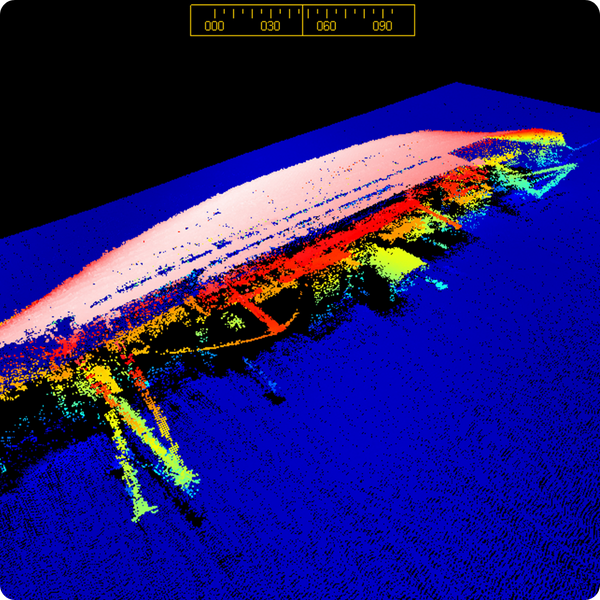
We deploy manned or remote-controlled survey boats equipped with hydrographic sonar and GPS tracking. Navigating a precise grid pattern across your lake or pond, we collect thousands of depth points. This raw data is processed to generate heat maps and contour models that reveal the exact topography of the bottom, identifying sediment piles, deep channels, and hidden obstructions.
Data-Driven Decision Making
Guesswork in waterway restoration leads to budget overruns. Our surveys provide the hard numbers needed for precise planning and execution.
Precise Volume Calculations
Visual estimates of sediment depth are notoriously inaccurate. Our bathymetric surveys calculate sediment volume down to the cubic yard. By comparing the current bottom depth against the original design depth (or hard bottom), we can tell you exactly how much material needs to be removed. This precision eliminates the risk of under-bidding or over-paying for dredging services.
Budgetary Certainty
When you know the exact scope of the problem, you can build a reliable budget. Our survey reports provide the foundation for fixed-cost dredging quotes. Instead of entering a project with an open-ended hourly rate, you have the data to demand accurate pricing and timelines, ensuring your restoration project gets approved and stays within its financial constraints.
Long-Term Sediment Monitoring
Bathymetric mapping is not just a one-time tool; it is a long-term management asset. By surveying your waterway periodically (e.g., every 3-5 years), you can track sedimentation rates over time. This data allows you to predict when future maintenance will be needed, preventing emergency shutdowns and allowing for proactive capital improvement planning.
Mapping the Path to Success
We provide the data that drives successful projects.
Precision Planning: Know the exact volume of sediment.
Visual Reports: Easy-to-understand maps and models.
Safety Focus: Identifying underwater hazards before work begins.
Baseline Data: Monitor sedimentation rates over time.
Get A Quote
Get In Touch To Talk With A Team Member!